


In our earlier blogs, we have reviewed the need for motor management and shared steps for calculating the value of your current motor portfolio. Armed with the background let’s walk through a practical illustration on Mayberry Public Utilities which benefited from this methodology and achieved an annual savings of approximately $500,000.
Mayberry Public Utilities (yes we are in the South and loved the show) is a small water utility and serves about 1,500 customers. It has a total motor portfolio size of 5,250 horsepower and the motor value constitutes 37% of its total capital assets. Out of its total annual energy expenses of $1,596,000, motor/motor-driven loads consume approximately 89.6% of the energy required to produce and distribute drinking water. 56% of their motors/motor driven assets had depreciated which translates to a higher percentage of older motors in Mayberry’s portfolio – a perfect candidate for motor management savings!
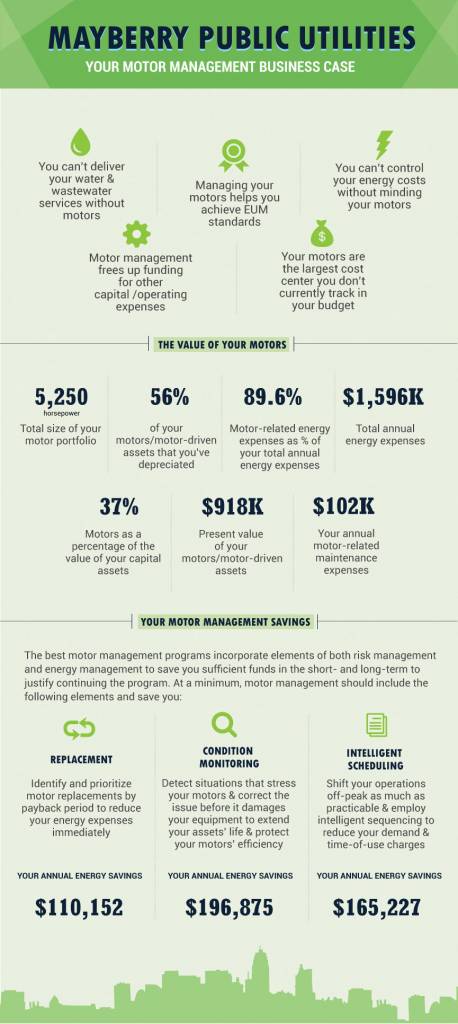
Using a back-of-the-envelope calculation, Mayberry’s annual motor energy spend works to $102,000. As explained in this blog, Mayberry saved $110,152 by replacing their older motors, used proactive condition monitoring techniques to save up to $196,875 and scheduled their operations to optimize usage of time-of-use rates to achieve an annual energy savings of $165,227.
To learn more about best practices for motor management, download our white paper.