


Motors are the workhorse of any utility’s operations. Water utilities, even more so, since pumps, mixers, lifts, filters, fans, aerators, blowers, air compressors, dewatering equipment, sludge thickeners, and conveyors depend on motors to drive their operations. The higher the utility value of an item, the greater the need for cost and efficiency management. It is not uncommon for water and wastewater utilities to have motor-driven equipment that consumes over 70% of their total electricity usage.
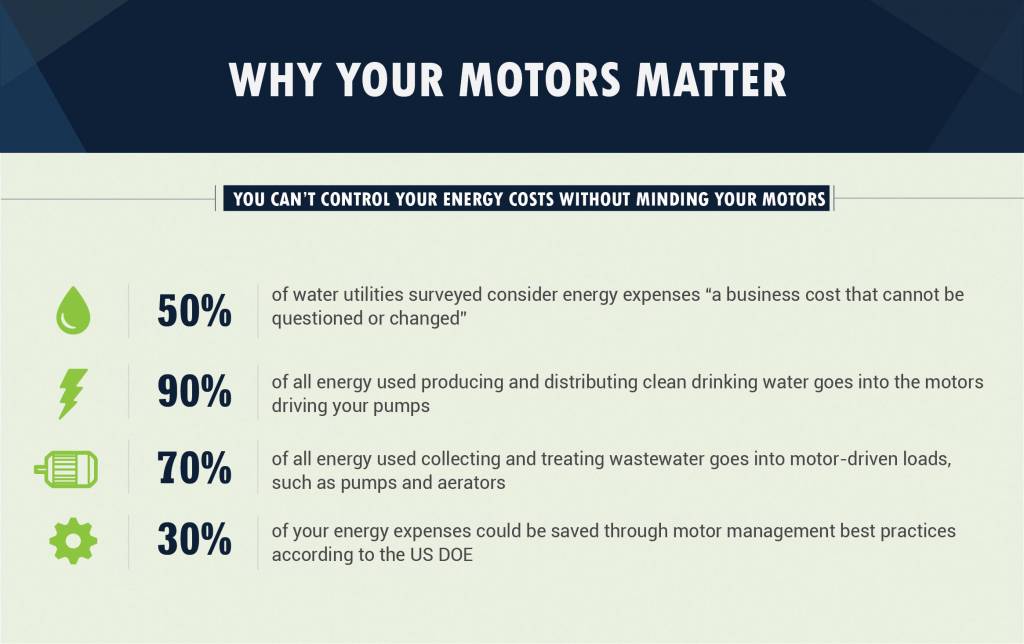
The general perception is that energy costs are uncontrollable and a ‘necessary evil.’ US Department of Energy (DoE) studies have shown that implementation of best practices in motor management can reduce a facilities’ energy use by up to 30% without affecting water quality. Here are five major reasons why motors matter.
1. You can’t deliver your water and wastewater services without motors
Your staff may form the backbone of your utility operations, but motors are your workhorse. Your operation depends on reliable and efficient motor operation.
2. Motors are the largest cost center you aren’t currently tracking in your budget
Motor-related expenses hide in several places within both your operating and capital budgets obscuring their value. For example, you track your motors’ value and depreciation as capital assets in your statement of net position, while your motors’ energy and maintenance expenses go in your Operating budget.
Considering the fact that energy costs rank as the second highest operating expense in utilities, and motors take the lion’s share of energy consumption, motors as a cost center should not be ignored.
3. You can’t control your energy costs without minding your motors
Despite the general belief that energy costs (motor usage costs, in particular) are uncontrollable, the fact is reducing your energy expenses is easier than you think. Yes, you do not have control over the rate increases imposed by your electric utility provider, but you can take proactive steps to manage your energy use.
4. Motor management frees up your budget without increasing your rates
The savings you gain with motor management will give you the financial flexibility to reallocate your funds for other line items in your operating budget and perhaps avoid rate increases for your customer. Replacing inefficient motors, right-sizing your motors, using condition monitoring to right-size your motor maintenance, and optimizing your operation schedules — have the potential to reduce your energy expenses by up to 30%.
5. Managing your motors helps you meet EUM standards
Motor management supports the implementation of some of the major principles of Effective Utility Management such as operational optimization, infrastructure stability, financial viability and community sustainability. Whether you are aiming at an AWWA Certification or just looking to streamline your business process, Motor Management should be part of your plan.
Motor Management is the cornerstone for achieving energy efficiency and performance. Therefore, it is essential that water and wastewater utilities identify and understand the value of motor management best practices. To learn more download our white paper on Building the Business Case for managing your motors.